

2025-10-17T07:17:58
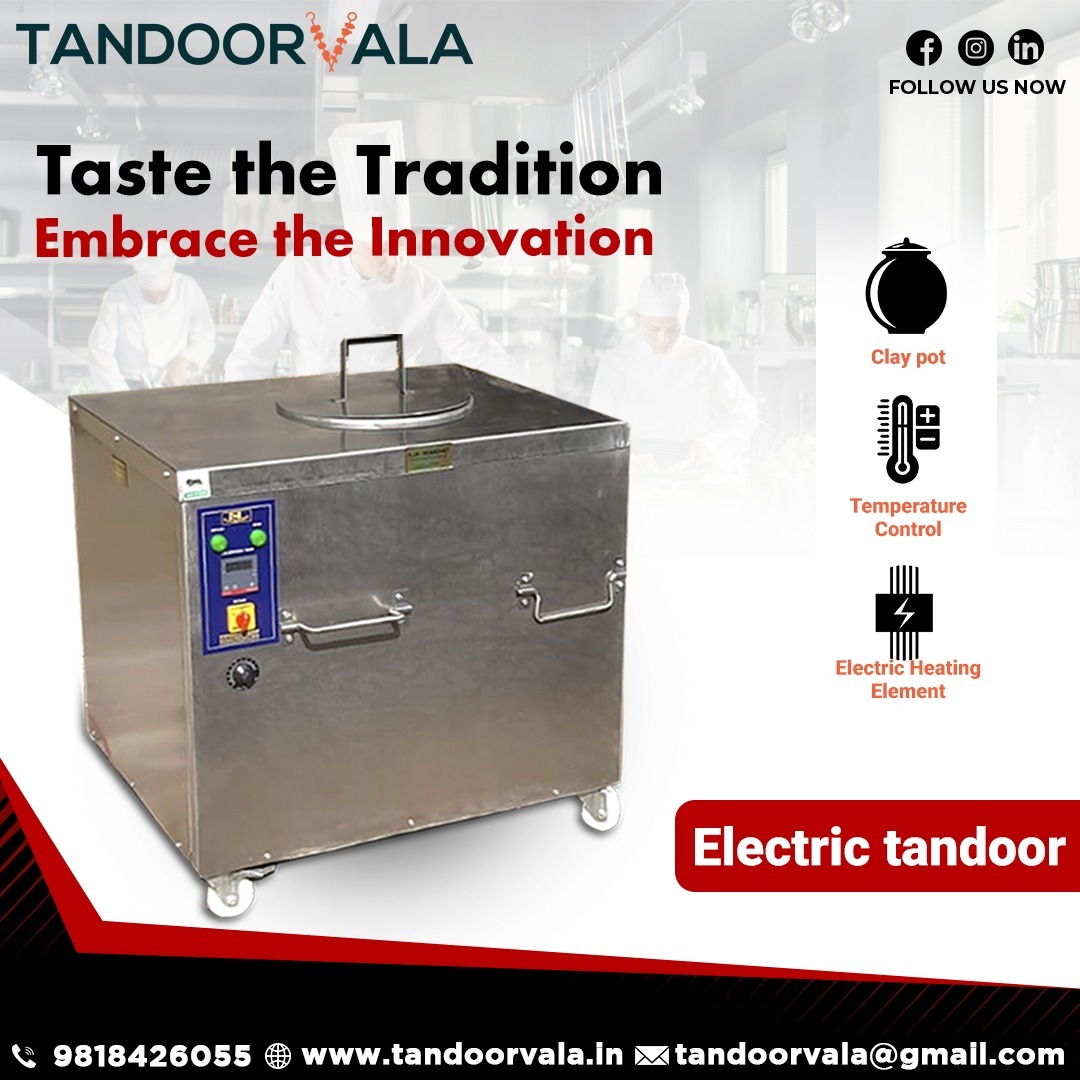
Commercial electric tandoors are modern, heavy-duty cooking appliances designed for high-volume use in restaurants, hotels, and catering businesses. Unlike traditional charcoal or wood-fired tandoors, they use electricity as their power source, making them a smoke-free and convenient alternative for commercial kitchens. Key features Construction: Most commercial models have a durable, stainless steel exterior and a reinforced clay interior to provide efficient heat retention and authentic tandoor cooking results. Capacity and size: Available in a range of sizes, from single-tray units for smaller commercial setups to large square or drum tandoors that can cook dozens of rotis at once. Many are also available with wheels for easy portability. Power and voltage: These appliances require powerful electrical connections, with some larger units needing a three-phase, 440-volt, 12 kW setup. Smaller models for commercial use typically run on 220–240 V. Precise temperature control: A digital temperature controller with a display allows chefs to set and monitor cooking temperatures accurately. This provides more consistent results compared to traditional tandoors. Safety features: Built-in features like a shock-proof system, circuit protection, and an overheat protection mechanism ensure safe and reliable operation in a busy kitchen environment. Low maintenance: Since there is no charcoal or ash to clean, electric tandoors are simpler to maintain. The stainless steel body is also easy to wipe down. Smoke-free operation: The electric heating elements produce no smoke, making them suitable for indoor use in places like malls, airports, and hotels where gas or charcoal cooking is not permitted. Cooking versatility: Beyond traditional tandoori items like naan, roti, and tandoori chicken, they can also be used for grilling, barbecuing, and roasting various foods
Have a question? Ask here!
Required fields are marked *